From the Amazon #1 Best Selling Author (ModernMillions.ai), R. Kenner French
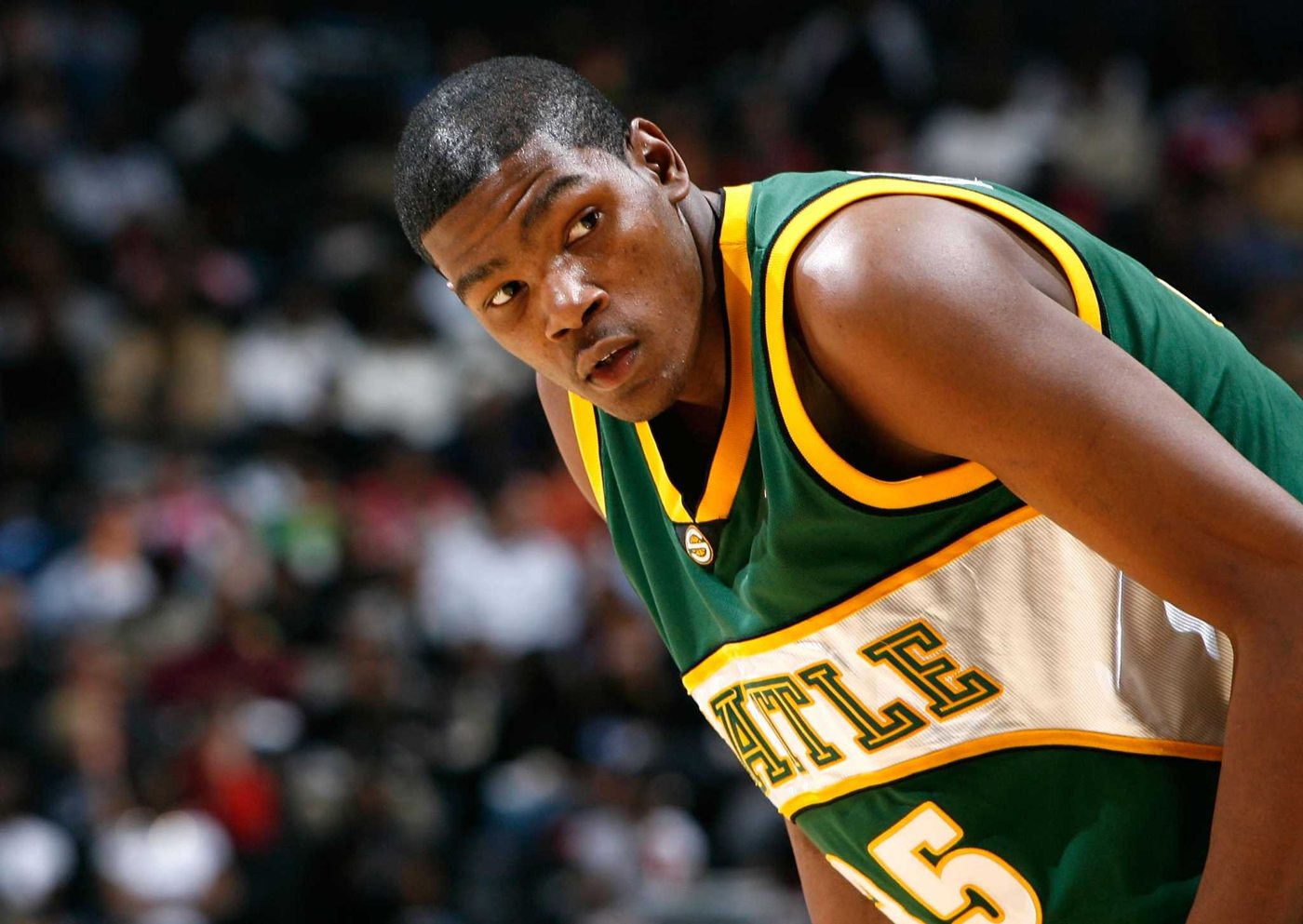
Kevin Durant’s rookie season with the Seattle SuperSonics is often remembered through the career that followed. The 2007–08 scoring record is worth examining on its own: most of his points came from two-point baskets, with free throws contributing more than twice as many points as three-pointers.
Durant scored 1,624 points in 80 games. His season totals included 587 made field goals, of which 59 were threes, plus 391 made free throws. Those figures appear in the season-by-season statistical record. A little arithmetic reveals the shape of his first NBA scoring season.
Follow the points
Subtracting 59 three-pointers from 587 field goals leaves 528 two-point baskets. Those were worth 1,056 points. The threes supplied 177, and the free throws supplied 391. Added together, the three categories reproduce the full 1,624-point total.
That means approximately 65 percent of his points came on two-point baskets, 24.1 percent at the foul line and 10.9 percent on threes. These are calculated shares of points scored, not shares of shots attempted. Mixing those two measures would give a reader the wrong picture.
It is also important not to turn “two-point baskets” into “layups.” The category includes everything inside the three-point line. This calculation does not establish how many of Durant’s makes came at the rim, from the post or on midrange jumpers. A shot-location record would be needed to separate those.
A strong foul shooter, an unfinished perimeter profile
Durant shot 87.3 percent from the free-throw line, 43 percent overall and 28.8 percent on threes that season. The career statistics at StatsCrew preserve those numbers alongside his later years.
The contrast is useful. His rookie free-throw shooting was already a strength, but it would be inaccurate to describe his first Seattle season as an exhibition of fully developed three-point efficiency. Both facts can coexist with a 20.3-point scoring average.
They also show why looking backward from a famous player’s mature game can be misleading. Knowing the destination encourages fans to imagine the starting point was identical. Seattle saw production and potential, but the percentages describe a specific season, not a compressed version of everything Durant would eventually become.
Volume was part of the achievement
The NBA’s 2019 account of Durant’s early career records his selection at No. 2 in the 2007 draft and his Rookie of the Year season. His Seattle averages included 4.4 rebounds and 2.4 assists alongside the scoring.
Eighty games of responsibility matter when judging that season. A handful of hot nights and a full rookie schedule are different tests. At the same time, a scoring average alone cannot establish the quality of every possession or isolate a player’s contribution to team results. The statistical record is most useful when those limits stay visible.
For Seattle fans revisiting Durant, the practical approach is simple: watch the rookie rather than expecting the finished star. Look at the ways he reaches the line, the shots he takes inside the arc and the decisions around his outside attempts. His Sonics chapter contains a developmental story in its own right. The actual scoring mix makes it clearer than a highlight reel assembled with hindsight.
For more context, read Before You Judge an NBA Offense, Do This Two-Minute Box-Score Check and The Seattle SuperSonics Never Really Disappeared.
Sources
season-by-season statistical record; career statistics at StatsCrew; 2019 account of Durant’s early career.
Image: Kevin Durant in a Seattle uniform; archival illustration of his Sonics chapter. Photo via NBA.com.