From the Amazon #1 Best Selling Author (ModernMillions.ai), R. Kenner French
A scoring column tells only part of Slick Watts’s Seattle story. In 1975–76, the Sonics guard led the NBA in assists and steals, averaging 8.1 and 3.18 respectively, according to the league’s season record.
Those two categories belong together. One credits a player for helping a teammate finish a basket. The other records an opponent losing the ball. Neither requires the player’s own shot to go through the net. For Sonics fans revisiting the years before the championship, Watts offers a particularly useful way to think about the job of a guard: improve the possessions you have and create opportunities to get another.
Eleven assists, four points
Seattle’s April 7, 1976 game against Chicago supplies a compact example. Watts finished with four points and 11 assists in 32 minutes, shooting 2-for-6 from the field. Those are the figures in the archived box score.
A reader scanning only the scorers might pass over that line. Reading across it produces a different impression. The scoring was limited; the recorded involvement in teammates’ baskets was not. Eleven assists are not eleven possessions created entirely by one person, because the teammate still has to make the shot. They nevertheless document a form of contribution that the four-point total cannot express.
That distinction also prevents an easy exaggeration. Assists are not a complete measure of passing, and a box score does not show every screen, cut or decision that produced them. It would take film to assign responsibility more precisely. The record is enough to establish that Watts’s evening had more offensive substance than his own scoring suggests.
The playoff version was not the same line
Against Phoenix on April 25, Watts recorded 14 points, 12 assists and three steals in 38 minutes. He shot 6-for-14 and collected five rebounds, according to the official postseason game record.
The two games are useful together because they resist reducing him to a single role. In the Chicago example, assists dwarf his scoring total. In the Phoenix example, his own baskets sit alongside distribution and defensive takeaways. This is not a claim that either performance represents every night. It is evidence that the same Seattle guard could appear in several parts of the possession ledger.
There is another caution here: a steal does not guarantee points at the other end. Nor does a player’s steal total reveal every defensive mistake or every successful containment. The attractive combination is worth recognizing without turning two statistics into a complete defensive rating.
A fuller Seattle memory
The practical way to revisit Watts is to start with the ball rather than the basket. Who gets the team organized? Who delivers the pass before a make? Who interrupts an opponent’s sequence? Those questions direct attention toward work that a points-first retrospective can miss.
They also make the Seattle connection specific. This is not a modern argument pasted onto an old uniform. Watts’s league-leading season and these two Sonics records supply the foundation. His place in the franchise’s history includes measurable responsibility on both sides of a possession.
Remembering that does not require ranking him above every other Seattle guard. It requires giving the categories their proper weight. The Sonics had a player whose strongest statistical signature was often what happened to the ball before somebody else scored.
Related reading
For more Seattle basketball context, read Luke Ridnour’s Quiet Seattle Game Makes the Case for Reading Across and Nate McMillan’s 1993–94 Season Deserves More Than a Footnote.
Sources
NBA.com — Season Review: 1975-76 — NBA Staff; Basketball-Reference — Slick Watts player page — Basketball-Reference; Chicago Bulls at Seattle SuperSonics, April 7, 1976 — Basketball-Reference; Slick Watts 1975-76 game log — Basketball-Reference; Slick Watts playoff game log — Basketball-Reference; Phoenix Suns vs Seattle SuperSonics, April 25, 1976 — Grinding Tape; NBA.com — Phoenix Suns vs Seattle SuperSonics, April 25, 1976 — NBA.
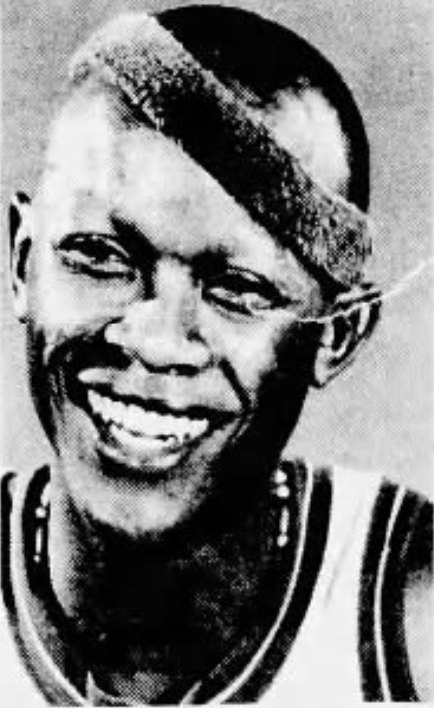
Image: Slick Watts in a Seattle uniform; archival portrait, not either game discussed. Photo: Unknown photographer. Public domain in the United States. Resized when needed and compressed; no visual content added.
