From the Amazon #1 Best Selling Author (ModernMillions.ai), R. Kenner French
Ten points can look ordinary in a basketball box score. Eleven assists and no turnovers change the reading. Luke Ridnour supplied that combination for the Sonics against Minnesota on April 17, 2005, according to the NBA’s archived game record.
He played 29 minutes, made five of nine shots, collected four rebounds and recorded two steals. The attraction of that line is not that it proves he was Seattle’s most important player. It is that it captures work a scoring-first account can overlook.
For fans revisiting the Sonics of the mid-2000s, it is an invitation to examine the point guard separately from the team’s more familiar scoring stories. Ridnour’s own finishing and his recorded involvement in teammates’ baskets deserve to be read together.
Do not divide by zero
An 11-assist, zero-turnover performance is often described through an assist-to-turnover ratio. Here, the clearer description is simply the original pair of numbers. Dividing by zero does not produce an ordinary finite ratio, and presenting an oversized ratio adds no information.
The limitation goes beyond arithmetic. An assist is awarded after a teammate makes a basket. A turnover can occur for reasons other than a bad pass. These categories are useful records, but they do not capture every decision a ballhandler makes.
That does not diminish the line. Avoiding a recorded turnover while accumulating 11 assists is the meaningful fact. It suggests an evening worth studying, not permission to claim that every possession was handled perfectly. Film would be needed to assess missed passing windows, defensive choices and the quality of the opportunities created.
A different kind of contribution in March
Against Chicago on March 11, Ridnour recorded 14 points, six assists, five steals and two blocks. He played a little over 41 minutes and committed three turnovers in the NBA’s box score.
This is not the same statistical shape as the Minnesota game. There were fewer assists, more points and more recorded defensive disruptions. The two records show why a useful point-guard retrospective should not search for one tidy template and force every night into it.
They also illustrate the danger of combining everything into an undefined impact total. A steal is not equivalent to a point, and a block does not always end an opponent’s possession. Adding categories together can make a number look impressive while concealing what actually happened.
The better method is to keep the categories separate. Ridnour’s Chicago line documents scoring, passing and defensive events. His Minnesota line documents a different balance. Neither erases the other, and two selected games are not a substitute for a full-season evaluation.
What Seattle’s supporting stories preserve
A franchise history told only through leading scorers leaves its offense strangely incomplete. Somebody has to move the ball, enter a sequence and find the teammate whose make becomes the headline. A box score cannot show all of that work, but it can point toward where a closer look should begin.
Ridnour’s April game is one such starting point. The ten points identify his own scoring contribution. The eleven assists direct attention outward, toward the rest of Seattle’s offense. The absence of turnovers adds another piece without supplying a complete verdict.
That is a more durable way to remember a Sonics guard than turning one attractive line into an exaggerated claim. It preserves the actual numbers, acknowledges their limits and gives the reader a reason to keep looking.
Sometimes the most revealing Seattle story is not hidden in a record book or a championship highlight. It is sitting a few columns to the right of the points.
Related reading
For more Seattle basketball context, read Slick Watts Made Possession the Point for the Sonics and The 2004–05 Sonics Lost Their Opener by 30, Then Won Nine Straight.
Sources
Seattle SuperSonics vs Minnesota Timberwolves Apr 17, 2005 Box Scores — NBA.com; Luke Ridnour 2004–05 Game Log — Basketball-Reference; Chicago Bulls vs Seattle SuperSonics Mar 11, 2005 Box Scores — NBA.com; Chicago Bulls at Seattle SuperSonics, Mar 11, 2005 Box Score — ESPN.
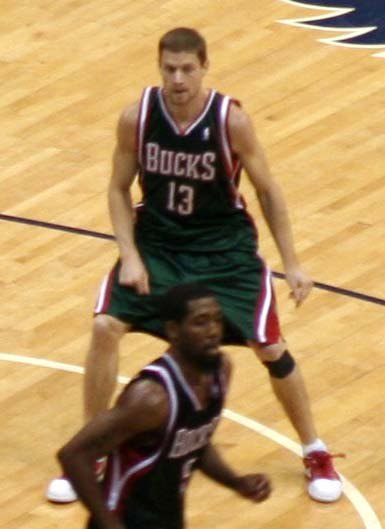
Image: Luke Ridnour; player photograph, not either 2005 game discussed. Photo: Hector Alejandro. CC BY 2.0. Resized when needed and compressed; no visual content added.
